
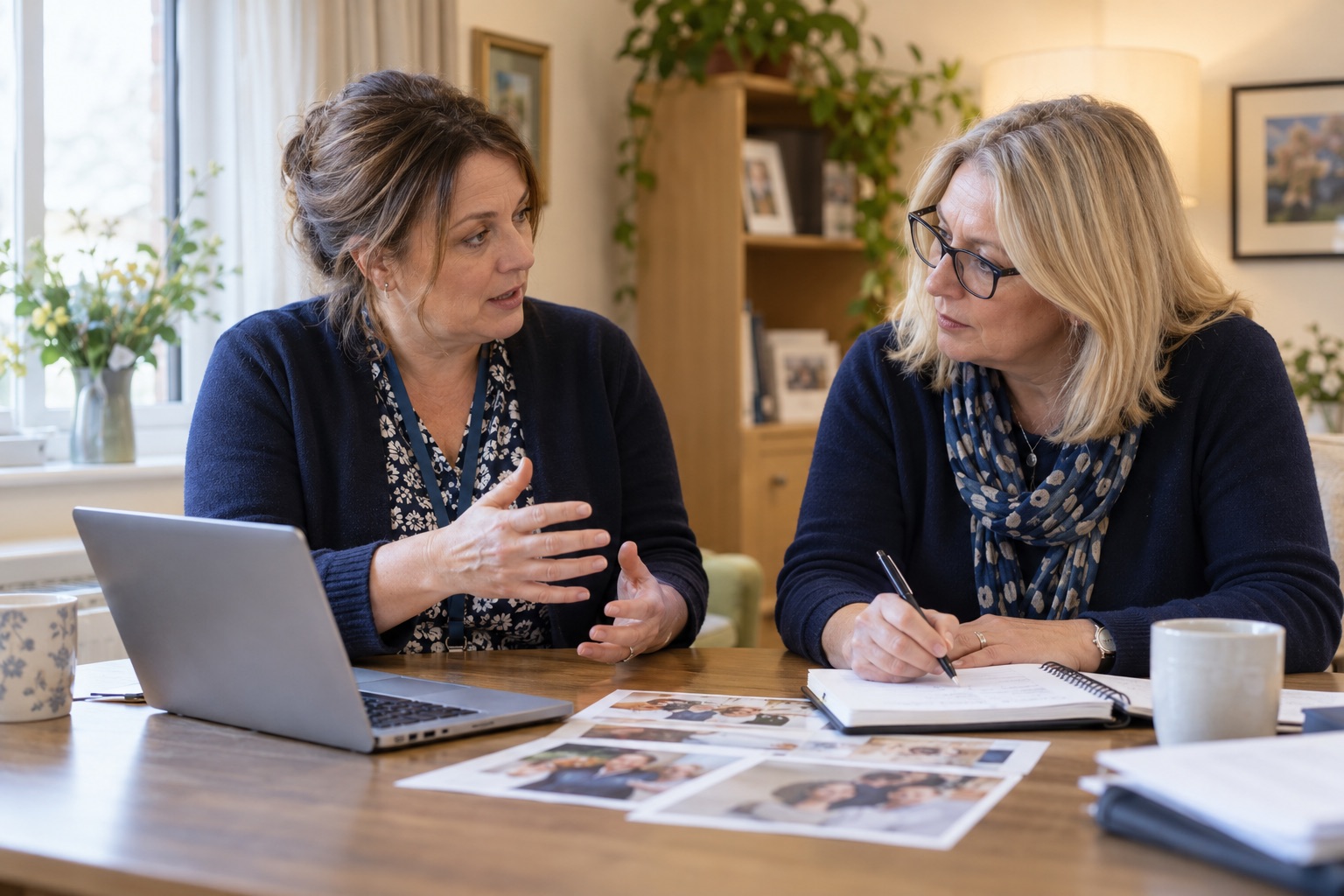
The briefs we receive from care homes are usually one of two kinds. "We need a new website" is the first kind. "We need more private-pay enquiries, we're at 82% and the local authority rate is killing us, and the last agency spent eight months on a website that didn't move the number" is the second. The second kind gets better work, every time, and it took thirty seconds longer to write.
Start with the problem, not the deliverable
You may well need a new website. But if you brief for a website, you will get a website, and nobody will have asked whether a website is what fills the beds. Brief for the problem. Occupancy is stuck. Enquiries come in but do not convert. Too many short-stay placements. Private-pay families go elsewhere. Then let the agency propose what fixes it. If they come back with "a website" without asking any questions, that tells you something too.
Bring the numbers you have
Current occupancy and the mix between private pay and funded. Enquiries per month if you log them, and an honest "we don't log them" if you do not. Fees. Where the last few residents came from. What you spent on marketing last year and what it produced, even if the answer is "no idea".
Owners sometimes hold these back, as though sharing them weakens their position. The opposite is true. An agency that knows you are at 82% with a 60/40 funded split will give you a sharper, cheaper plan than one guessing from the outside.
Say who the family is
Not "older people needing care". The person who makes the decision: usually a daughter or son in their fifties or sixties, often living some distance away, choosing under time pressure after a hospital stay. Say what they worry about at your home in particular. Price, usually. Whether their parent will be lonely. Whether the home will cope if dementia develops. If you have heard the same question on ten showrounds, write it down. That is the brief.
Say what cannot change
The budget, honestly, including the range you would stretch to for the right result. The timescale, and what is driving it. The things that are off the table: the home's name, the logo the founder designed, the fee structure the board has just signed off. Anyone who has run a project knows the constraint that surfaces in month three is the one that costs the most. Put it in the brief.
A good brief fits on one page. Problem, numbers, family, constraints, what success looks like in six months. Anything longer is usually hiding the fact that one of those five is missing.
The questions to expect back
A good agency will not start work from the brief. They will ask questions, and the questions are a test of whether they understand care. Expect to be asked what happens when a family rings and who answers. Whether you have mystery shopped yourself. What your showround looks like. Whether fees are on the website and why not. Which three homes you lose families to. What the CQC report says and when the next inspection is due.
If none of those come up and the conversation is about colours and logos, you are talking to a generalist who will learn care at your expense. If all of them come up, you are talking to someone who has sat where you sit, and the brief has done its job. That is the conversation we try to have in the first call, before anyone has quoted for anything.
Want this looked at for your home?
Thirty minutes on your homes, your occupancy mix and what you've already tried. No pitch deck.